
AdScale: AI-Driven Facebook & Google Ads for Ecommerce

AdScale: AI-Driven Facebook & Google Ads for Ecommerce In the modern ecommerce landscape, advertising has become more competitive than ever. Brands are spending millions on Facebook and Google ads, yet results often remain unpredictable. Manual campaign creation, optimization, and budget allocation can be time-consuming and inefficient—especially for small and mid-sized ecommerce businesses. This is where AdScale, an AI-driven advertising automation platform, is transforming the game. Designed specifically for ecommerce brands, AdScale uses machine learning to automate campaign creation, optimize performance in real time, and maximize return on ad spend (ROAS). In this detailed guide, we explore how AdScale works, its core features, benefits, and why it is becoming a go-to advertising solution for ecommerce brands across the globe. What Is AdScale? AdScale is an advanced advertising automation tool that utilizes artificial intelligence to streamline and optimize Facebook and Google advertising for ecommerce businesses. Instead of manually creating campaigns, selecting audiences, writing ad copy, and testing variations, AdScale handles everything automatically using real-time store data. It integrates seamlessly with major ecommerce platforms such as: Shopify WooCommerce BigCommerce Magento Once connected, it pulls product data, customer behavior patterns, and sales history to generate high-performing ad campaigns without human intervention. How AdScale Uses AI to Improve Advertising AdScale’s AI engine analyzes thousands of data points to optimize campaigns across Facebook, Instagram, and Google. Here’s how it works: Smart Audience Targeting Instead of relying on generic ad audiences, AdScale uses your store’s data to create precise, high-intent customer segments.These include: Repeat buyers Abandoned cart users High-value customers Browsers with strong purchase intent Using these segments, AdScale ensures your ads reach people who are most likely to buy. Automated Campaign Creation AdScale generates complete ad campaigns in minutes. The AI writes copy, selects images or product feeds, sets targeting, and chooses the ideal placements. The system also automatically syncs product updates, price changes, and stock levels. Predictive Budget Allocation Managing ad budgets manually can lead to overspending or underspending. AdScale’s predictive engine allocates your budget where it will generate the highest ROI. It continuously shifts spending between Facebook and Google depending on which channel performs better on a given day. A/B Testing Without the Manual Work Split testing is essential for ad optimization, but doing it manually is tedious. AdScale tests: Creatives Headlines Audiences Placements Bidding strategies The AI then automatically promotes winning combinations and pauses underperforming ones. Key Features of AdScale I will set up, optimize, and manage search ads, google ads, adwords, ppc campaigns Facebook & Instagram Ads Automation AdScale integrates with Meta Ads Manager and automates everything from campaign creation to scaling. It builds dynamic ads using your product catalog and optimizes based on real-time performance data. Google Ads Automation The platform also manages Google Shopping, Search, Display, and YouTube campaigns. With automated keyword generation and bidding optimization, AdScale helps ecommerce stores improve visibility and conversions across Google’s entire ecosystem. Unified Dashboard Managing separate dashboards for Google and Facebook ads can be overwhelming. AdScale provides a single interface to view performance metrics, budgets, ROAS, and customer insights. Customer Data Platform (CDP) AdScale includes a built-in CDP that organizes all customer data in one place. The AI uses this data to predict future buying behavior and refine targeting. Dynamic Product Feeds The system automatically updates product feeds across all advertising channels. Pricing, inventory, and product details are updated instantly. Marketing Automation Along with ads, AdScale includes automated email and SMS marketing tools. This helps build a complete omnichannel marketing system within a single platform. Benefits of Using AdScale for Ecommerce Increase ROAS with Less Effort Brands using AdScale often report higher ROAS due to advanced AI optimization. Since the system analyzes more data than any human could, it finds opportunities for better results with minimal ad spend. Saves Time and Eliminates Manual Work Ecommerce owners no longer need to: Create ads manually Monitor campaigns daily Adjust budgets Choose audiences Manage multiple dashboards Everything is automated, allowing businesses to focus on growth instead of micromanaging ads. Better Use of First-Party Ecommerce Data AdScale uses data from your website, sales history, and customer behavior to make smarter decisions. This is especially useful after Apple’s iOS 14 privacy changes, which disrupted traditional Facebook targeting. Continuous Optimization Unlike human marketers, AI works 24/7.AdScale monitors performance and makes adjustments in real time, ensuring campaigns stay profitable throughout the day. Perfect for Brands with Small or Medium Budgets Many AI advertising tools are designed for enterprise-level companies. AdScale is affordable and accessible for small businesses—making high-level advertising available to everyone. AdScale: AI-Driven Facebook & Google Ads for Ecommerce Who Should Use AdScale? AdScale is ideal for: Ecommerce stores spending $1,000+ per month on ads Brands that want to scale without hiring a marketing agency Online shops struggling with Facebook/Google optimization Shopify businesses looking for automated advertising It is especially beneficial for stores that want to grow quickly but lack the time or expertise to manage complex advertising strategies. AdScale Pricing Overview Although pricing varies depending on ad spend and ecommerce platform, AdScale generally offers: A monthly subscription fee Additional costs based on ad spend The ROI often outweighs the cost due to improved targeting and optimization. Final Thoughts: Is AdScale Worth It? Absolutely—AdScale is a powerful AI-driven tool that simplifies Facebook and Google advertising for ecommerce brands. Its automation features save time, optimize performance, and significantly increase ROAS. For businesses that want to scale without hiring a full marketing team, AdScale offers a smart, efficient, and data-driven advertising solution. Whether you’re running a small Shopify store or a large ecommerce brand, AdScale can help you transform your advertising results with the power of artificial intelligence. SEO-Optimized FAQs What is AdScale used for? AdScale is used to automate and optimize Facebook and Google advertising for ecommerce brands using AI. Does AdScale work with Shopify? Yes, AdScale integrates seamlessly with Shopify to pull product data and automate campaigns. Can AdScale improve ROAS? Yes, its AI-driven optimization typically leads to higher ROAS and lower cost per acquisition. Is AdScale beginner-friendly? Absolutely.
Server-Side google Tracking, GTM, Multi Pixels & Analytics
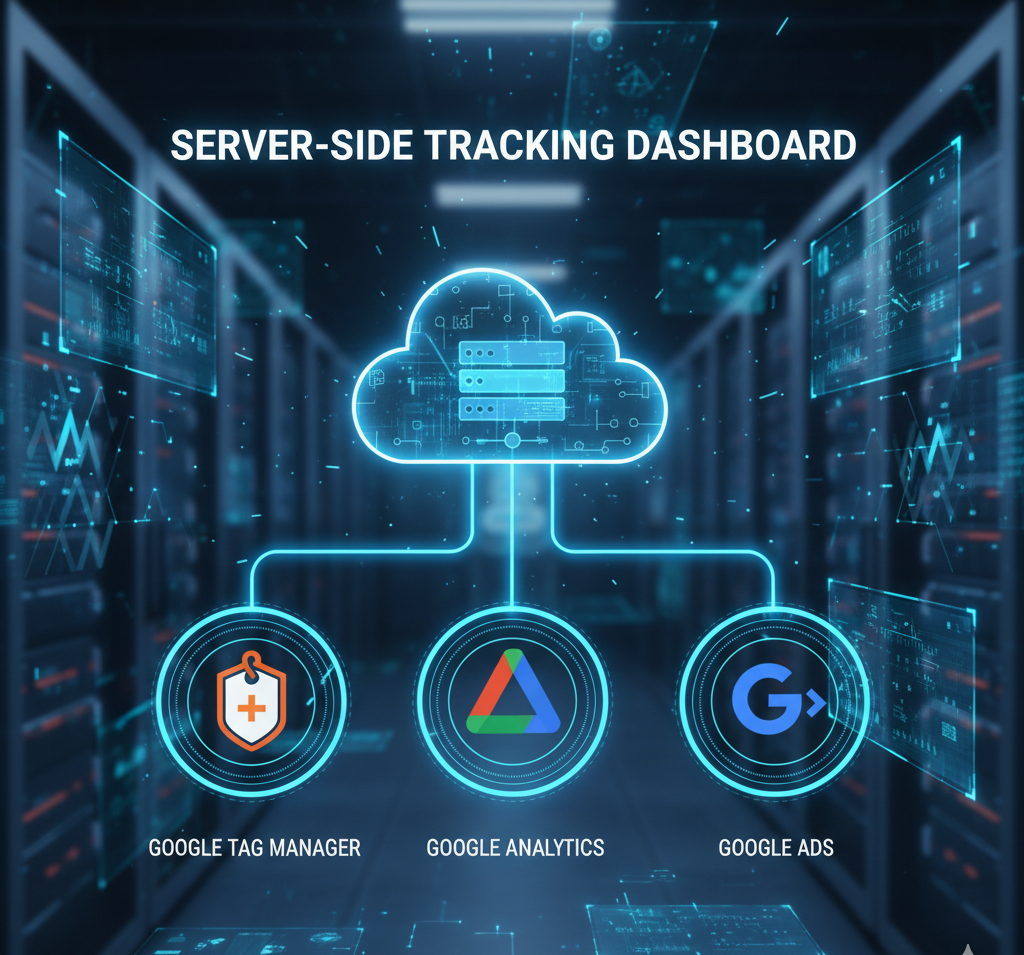
Server-Side google Tracking, GTM, Multi Pixels & Analytics In today’s privacy-focused digital world, accurate tracking is becoming increasingly challenging. Browser restrictions, ad blockers, cookie limitations, and iOS updates have reduced the effectiveness of traditional client-side tracking.This is why businesses and marketers are quickly shifting to server-side tracking—a powerful method that ensures more accurate data, faster websites, and stronger remarketing performance. In this blog, you’ll learn: What server-side tracking is Why it is better than traditional client-side tracking How to set up multi Google Pixels How to run remarketing using Google Tag Manager (GTM) How server-side tracking improves analytics and attribution Let’s begin. What Is Server-Side Google Tracking? Lorem ipsum dolor sit amet, consectetur adipiscing elit. Ut elit tellus, luctus nec ullamcorper mattis, pulvinar dapibus leo. Server-side tracking means your website sends data first to a secure tracking server, not directly to Google Ads, Analytics, or other platforms.This server processes, cleans, and redirects the data to the correct channels. How It Works (Simplified) User visits your website Website sends the event to your server container Your server validates and enriches data The server sends high-quality events to Google Ads, GA4, and other pixels This eliminates browser interference and ensures maximum accuracy Why Server-Side Tracking Is Essential in 2025 Client-side tracking is losing reliability due to: Browser privacy updates (Safari, Firefox, Brave) iOS 17+ data restrictions Third-party cookie blocking Ad blockers removing pixels Slower load time due to many tags Server-side tracking fixes all of these issues. Key Benefits ✔ Higher Tracking Accuracy (30–50% More Data) Events blocked by browser or ad blockers still reach Google via the server. ✔ Improved Page Speed Because fewer client-side scripts load in the browser, the site becomes faster. ✔ Better Conversion Attribution Reduces “dark conversions” that Google Ads cannot track normally. ✔ Enhanced Remarketing & Audiences Google receives cleaner and more complete data—ideal for performance campaigns. ✔ More Control Over Data (GDPR-Ready) Marketers can control what data gets stored or removed before sending to Google. Multi Google Pixels Using Server-Side GTM Many businesses need multiple tracking pixels such as: Google Ads Conversion Pixel Google Ads Remarketing Pixel Google Analytics (GA4) Events Floodlight Tags Third-party tracking (Pinterest, TikTok, LinkedIn, etc.) Traditionally, this makes websites slow.But server-side GTM handles unlimited pixels without harming performance. How Multi Pixel Setup Works One main GTM Web Container on your site All events sent → server-side endpoint Your server receives and distributes events to multiple platforms Google Ads + Analytics receive the same event in multiple formats Example: A purchase event is captured once → then automatically sent to: Google Analytics 4 Google Ads Conversion Google Ads Remarketing Google Enhanced Conversions Additional marketing platforms This creates perfect cross-platform consistency. Remarketing Using Google Tag Manager (Server-Side google Tracking) I will set up, optimize, and manage search ads, google ads, adwords, ppc campaigns Remarketing is becoming harder because browsers block third-party cookies.Server-side GTM solves this with first-party data enrichment. 🔥 How Server-Side Remarketing Works When a visitor lands on your site, the server creates a first-party user ID This ID is stored securely and linked to events Google Ads receives enhanced remarketing signals: Page view Add to cart View product Abandoned checkout Purchase behavior Google creates stronger remarketing audiences like: High-intent users Cart abandoners Repeat visitors High-value customers Result: Your retargeting ads become more accurate, cheaper, and more effective, even with cookie restrictions. Advanced Analytics With Server-Side GA4 GA4 works perfectly with server-side tracking because: Data accuracy increases You can send server-validated events Automated deduplication prevents double tracking User identity stitching becomes stronger Google Ads + GA4 attribution improves Key Enhancements: ✔ Cleaner Event Data Server-side removes duplicates, bot traffic, and invalid events. ✔ More Reliable Conversion Paths GA4 sees complete user journeys, even when browsers block tracking. ✔ Better ROAS & CPA Optimization Google Ads receives better conversion signals → Smart Bidding becomes more effective. Setting Up Server-Side Tracking (Simplified Guide) You need three main components: A GTM Web Container Placed on your website with standard tags. A GTM Server Container Hosted on a cloud platform like: Google Cloud AWS Vercel Netlify This runs the server-side environment. Event Mapping & Routing In GTM, you configure: Web container → sends events to server Server container → sends events to Google Ads, GA4, etc. Setup for enhanced conversions Validation for clean data No coding knowledge is required—just proper configuration. Who Should Use Server-Side Tracking? Click here Server-side is ideal for: E-commerce stores Service-based businesses Lead-generation websites Agencies managing multiple clients Anyone running Google Ads or remarketing High-traffic websites where accuracy is essential If your business depends on conversions → server-side tracking is a long-term asset. Final Thoughts Lorem ipsum dolor sit amet, consectetur adipiscing elit. Ut elit tellus, luctus nec ullamcorper mattis, pulvinar dapibus leo. Server-side Google tracking is not the future—it is the present.The shift from browser-based tracking to server-based tracking is essential for accurate data, stronger remarketing, and powerful Google Ads performance. With multi-pixel setup, enhanced remarketing, and deep analytics, server-side GTM gives businesses a competitive advantage and protects them from ongoing privacy changes. If you’re running ads, collecting leads, or selling anything online—server-side tracking isn’t optional anymore; it’s a necessity.
Google Ads Asset-Level Reporting to Display Campaigns 2026 Update Guide

Google Ads Asset-Level Reporting to Display Campaigns 2026 Update Guide Google Adds Asset-Level Reporting to Display Campaigns: What Advertisers Need to Know (2026 Update) Google Ads has announced one of the most important updates for Display advertisers: Asset-Level Reporting. For years, advertisers requested deeper visibility into how each creative element performs. Until now, Display campaigns only provided overall performance data — not individual asset insights. But in 2026, that changes.This update brings Display Ads closer to the transparency already seen in Performance Max campaigns. In this complete guide, you’ll learn: What asset-level reporting actually is Why this update matters What’s changing inside Google Ads How it works Best optimization strategies Who benefits the most How it impacts the future of Display advertising Let’s dive in. Learn more Blog What Is Asset-Level Reporting in Display Campaigns? Asset-level reporting means Google will now show performance data for every individual creative asset used in a Display campaign. This includes: Images Headlines Long headlines Descriptions Logos Short videos (Display video assets) Previously, you could not see which image performed best or which headline contributed most to clicks or conversions. Only the campaign-level results were visible. Now, Google provides detailed performance scores for every asset — similar to Performance Max asset insights. More learn click here Why This Update Matters For advertisers, this update is a major upgrade because it delivers clarity, control, and optimization power. Here’s why it’s important: ✔ Individual creative performance visibility You can finally compare: Best vs worst images Most engaging headlines High-CTR descriptions Weak assets dragging down performance ✔ Smarter optimization decisions You can refresh or remove low-performing assets and scale top performers. ✔ Lower ad costs When weak creatives are removed, Google’s system delivers ads more efficiently — reducing wasted budget. ✔ Better results Better creatives = higher engagement = stronger CTR and conversion rates. ✔ Display Ads becomes more data-driven Google Ads is moving toward a future where creative quality matters more than ever — and this update confirms that direction. What’s New in Google Display Ads (2026 Update) Google has introduced a new Assets Tab inside Display campaigns.This tab includes: Performance comparison for every creative asset Each asset gets a performance label such as: High Good Low Along with metrics like: CTR Conversions Engagement rate Impressions Device performance breakdown Asset iteration history You can now see: When an asset was added When Google last used it How long it has been in rotation Historical performance trends This helps advertisers understand long-term creative performance. Recommendations based on data Google Ads automatically recommends: Which assets to keep Which to refresh Which to remove When to add more variations This makes optimization easier and faster. How Asset-Level Reporting Works Here’s what you will find in the new Assets Tab: 📌 Performance ratings for each asset Google shows performance labels (High, Good, Low) based on predicted and actual engagement. 📌 Ad combination previews You can see how Google combines images, text, and logos to create various ad formats. 📌 Device-specific performance data You’ll learn which assets perform better on: Mobile Desktop Tablet Improvement suggestions Google provides suggestions such as: “Add more images” “Use higher-quality photos” “Add more variations of headlines” “Use lifestyle images for better engagement” All of this was previously unavailable in Display Ads. Benefits of Asset-Level Reporting Here’s how this update helps advertisers: ✔ Better Optimization Identify winning assets and increase their usage. ✔ Remove Poor-Performing Assets Stop wasting budget on creatives that don’t work. ✔ Boost CTR and Conversions High-performing assets naturally bring better results. ✔ Easier A/B Testing Now you can test images, headlines, and descriptions side-by-side. ✔ More Transparency Advertisers finally get performance visibility similar to Performance Max. Best Strategies to Use This Update (2026) To get the most value from Google’s new asset-level reporting, follow these proven strategies: Add More Creative Variations Google recommends: 5–10 headlines 3–5 long headlines 5–10 descriptions 10–15 images (various sizes) Multiple logos At least one short video More variety = better optimization. Replace “Low” Rated Assets Immediately If an asset receives a “Low” rating: Replace it Refresh it Redesign it This reduces your CPC and increases CTR. Reuse High-Performing Assets Across Other Campaigns If one image performs extremely well in Display campaigns, test it in: Performance Max Discovery campaigns Social media ads YouTube ads Good creative performs everywhere. Optimize Based on Device Performance If mobile users respond to lifestyle imagesand desktop users prefer product-focused images —you can adjust assets accordingly. Follow Google’s Creative Recommendations Google’s suggestions are based on performance predictions and machine learning.Following them increases ad strength and overall results. What This Means for the Future of Display Ads This update clearly shows Google’s future direction: ✔ More transparency ✔ More automation ✔ More emphasis on creative quality ✔ More machine-learning-driven optimization ✔ A unified reporting system (similar to PMax) In the coming years, creative assets will decide campaign success even more than keywords or targeting. Advertisers who adapt now will stay ahead. Who Will Benefit the Most? E-commerce brands Real estate campaigns Local service businesses App marketers SaaS companies Agencies running ads for multiple clients Freelancers and media buyers Content-heavy industries Basically, anyone who runs Display Ads will see performance improvements. Should You Update Your Display Campaigns Now? Yes — immediately. Here’s why: You get better visibility Stronger optimization options Higher conversions Lower costs Better creative development Better performance forecasting Asset-level reporting is one of Google’s biggest Display Ads upgrades in years. Final Thoughts Google’s new Asset-Level Reporting for Display Campaigns brings a new level of transparency and control that advertisers have been waiting for. By analyzing which creatives perform best, advertisers can make smarter decisions, reduce wasted ad spend, and improve results more efficiently than ever before. Advertisers who adopt this update early will see significant improvements in: CTR Conversions Engagement Overall ROI This is a major step forward for Display advertising — and a powerful upgrade for marketers in 2025 and beyond. Facebook Youtube
Facebook Ads Campaign: The Best Way to Boost Sales, Leads & Brand Growth

Discover strategies to make your Instagram Stories stand out from the crowd.
Top 10 Tips for Creating Engaging Facebook Ad Copy

Learn how to craft compelling ad copy that drives results on Facebook.
Mastering YouTube Ads: Tips for Maximum Engagement

Unlock the secrets to creating YouTube Ads that drive higher engagement and results.
The Importance of SEO in Digital Marketing
Implement SEO techniques to improve
online visibility and website traffic.